Target Audience
- African refugees and asylum seekers from Sub-Saharan African countries living in Egypt and parts of the Middle East.
- Multilingual learners who need Arabic for:
- community integration.
- education.
- daily communication.
- access to health and legal services.
Methodology
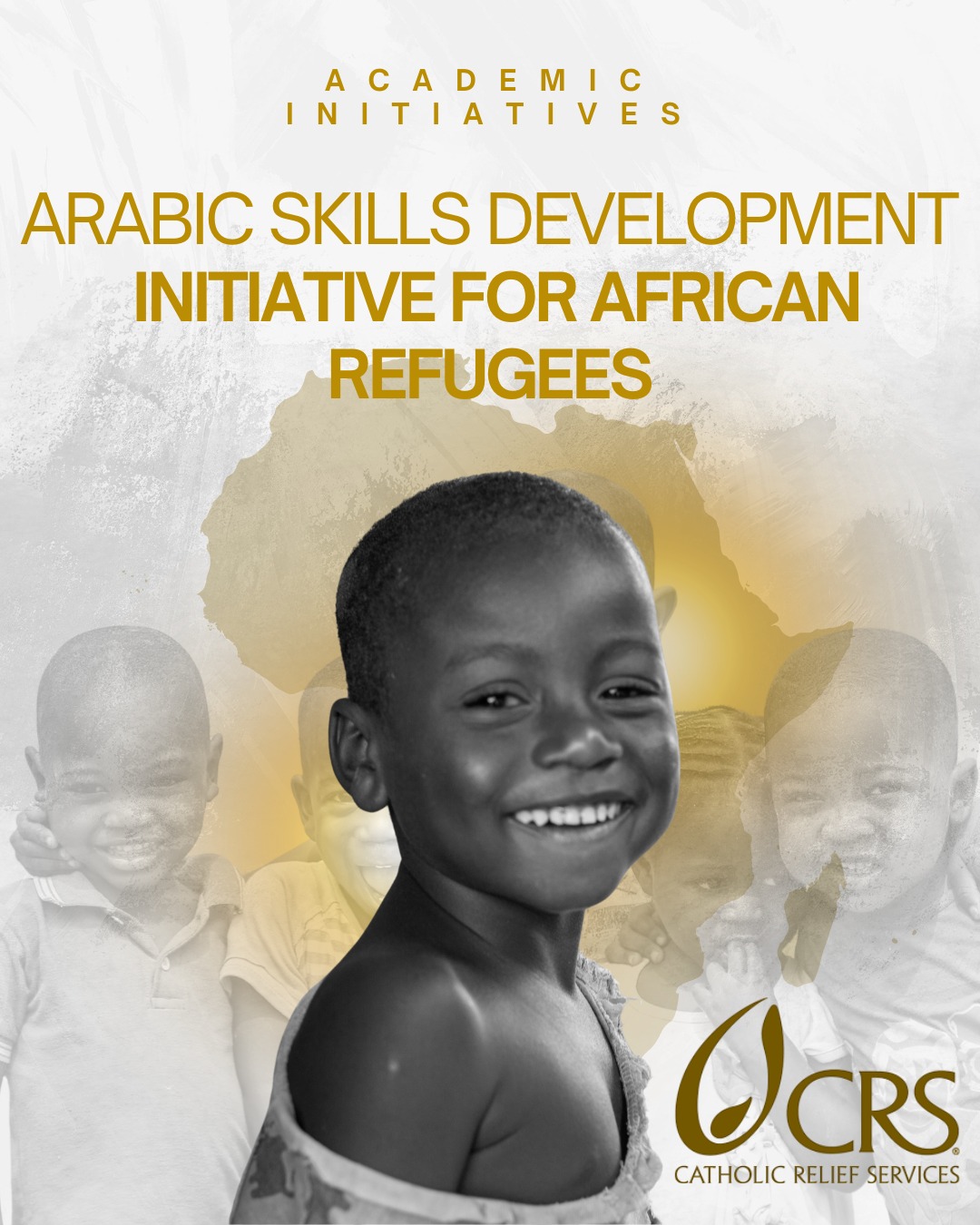
A humanitarian–educational initiative aiming to empower African refugees with practical Arabic skills that support communication, adaptation, and positive engagement within host communities.
The initiative delivered Arabic through real-life situations that reflect refugees’ daily needs, while applying culturally responsive teaching and addressing learners’ linguistic diversity and common challenges in pronunciation, comprehension, and vocabulary acquisition.
Content was developed based on needs analysis, supported by interactive and communicative learning activities that build confidence and functional language use. Staged assessment tools were applied to track progress and adapt instruction according to performance levels.
Outputs
- A level-based Arabic skills development program for refugees.
- Daily-life learning units covering:
- housing, transportation, shopping, schools, hospitals, official services.
- Communicative activities (dialogues, role-play, functional performance tasks).
- Assessment tools + progress reports.
- Supporting resources: worksheets, simplified learning materials (PDF).